Bone Grafting in Arlington Heights, IL
When a tooth is lost, the jawbone that held it slowly shrinks. A bone graft rebuilds that bone, so there is enough of it to hold a dental implant and to keep the neighboring teeth steady.
When a Bone Graft Helps
The jawbone stays strong because the roots of your teeth stimulate it every time you chew. When a tooth is lost, that part of the bone has nothing left to support, and it gradually wears away. Over time, the area can become too thin or too shallow to hold an implant, and the teeth beside it can start to shift. Advanced gum disease can also destroy the bone around teeth.
A graft may be recommended if you have been told there is not enough bone for an implant or if a tooth has been missing for a long time. Grafting when a tooth is removed helps preserve the bone from the start.
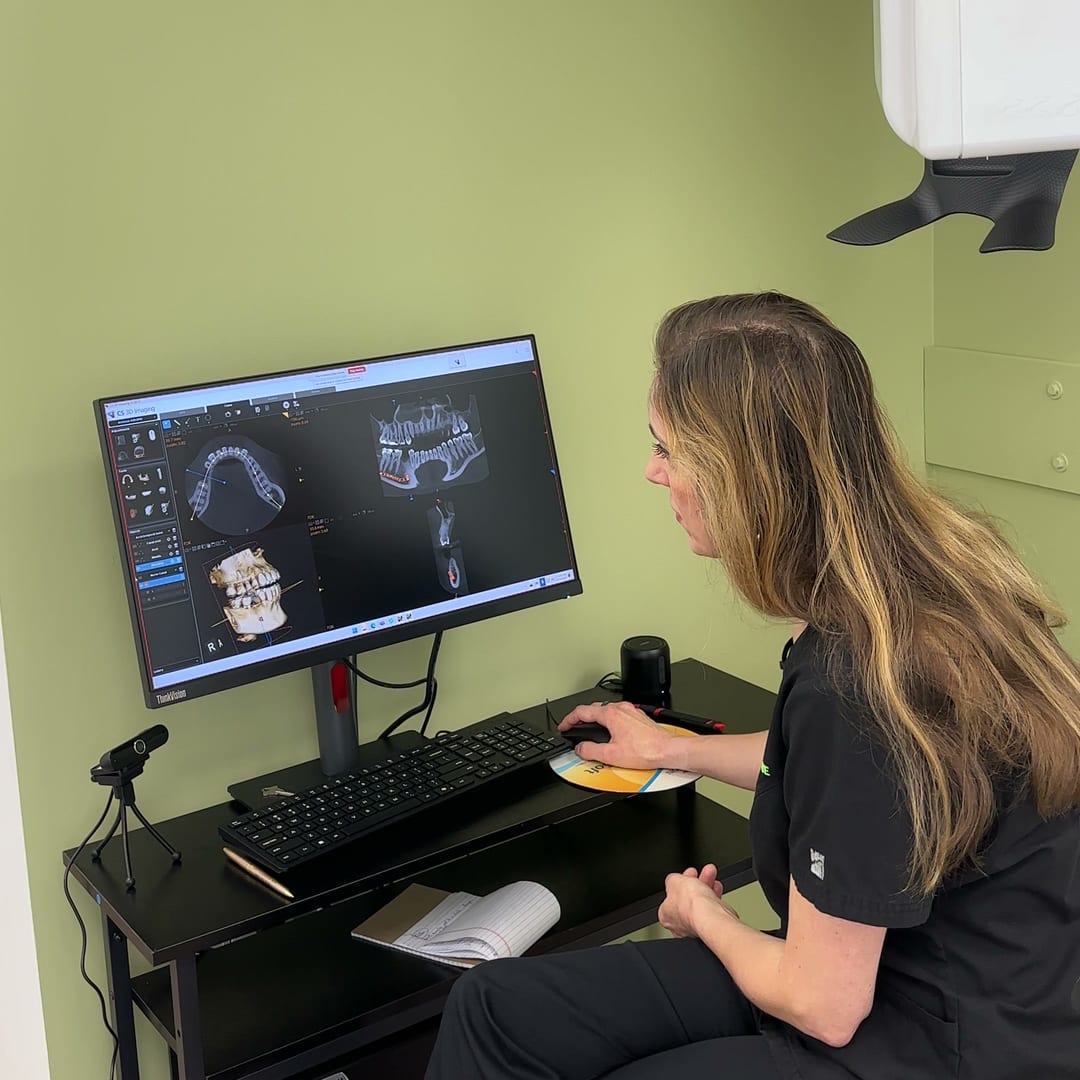
Seeing the Bone in 3D
A graft starts with knowing exactly where bone is missing, so it is planned on a CBCT scan, a 3D view of your teeth, jawbone and nerves. The scan shows how tall and how wide the bone is where a tooth is missing, which guides the choice of graft, and the same scan later plans the implant.
How a Graft Is Done
-
Evaluation
Digital X-rays and a CBCT scan show where bone is missing and how much.
-
Your Plan
Dr. Ivan goes over the graft and material with you.
-
Placement
After numbing, graft granules fill the area and stitches close it; PRF may be added.
-
Integration
Over several months, the graft joins your own bone.
Healing After a Graft
Some swelling and mild soreness are normal for a few days, and over-the-counter pain relief usually manages them. Eat soft foods and chew away from the graft for the first few weeks, and leave the area alone so the material can settle. Don't smoke while you heal, because smoking slows bone healing and makes the graft less likely to take. Follow the care instructions you're given and keep your follow-up visits.
Costs & Insurance
The cost depends on the type and size of the graft. Before treatment starts, you receive a written plan with an estimate of your share, and the office files the insurance claim for you.
Bone Grafting FAQs
Does bone grafting hurt?
The graft is placed under local anesthesia, so you should not feel pain during the procedure. Afterward, mild soreness and swelling are common, and over-the-counter pain medication usually handles them. Following your care instructions helps the area heal comfortably.
How long does it take for a bone graft to heal?
It depends on the type and size of the graft. Over time, the graft material joins the surrounding bone. A graft done as a separate procedure needs a recovery period, usually several months, before an implant can be placed. A graft placed with the implant heals along with it.
Can bone grafting and implant placement be done at the same time?
Often, yes. If the tooth was lost recently and little bone is missing, the graft and the implant can be placed in the same procedure. When bone loss is more severe, the graft needs time to heal before the implant goes in.
What materials are used for bone grafts?
A graft can use your own bone (an autograft), donated human bone (an allograft), processed animal bone (a xenograft) or a mineral substitute (an alloplast). Your own bone is the most effective. Donated and processed materials are sterile and come from a reputable national tissue bank, and Dr. Ivan goes over each option with you before one is chosen.
What happens if I don't get a bone graft?
Without treatment, the bone keeps shrinking. Nearby teeth may shift or loosen, and an implant can become harder or impossible to place. Treating bone loss early usually keeps the treatment simpler.
How much does bone grafting cost?
The cost depends on the type and size of the graft. You receive a detailed estimate before treatment, and our financing options offer ways to pay over time.
Is there an age limit for bone grafting?
No. Adults of any age can have a bone graft as long as their general health allows it. Your medical history and oral health are reviewed first to make sure it is a safe choice for you.
Schedule Your Visit
Schedule a consultation online to find out whether a graft fits your plans, or call the office with any questions first.
- Visit
1430 N Arlington Heights Rd #205
Arlington Heights, IL 60004- Hours
Monday 8am – 7pm
Tuesday 8am – 5pm
Wednesday 8am – 5pm
Thursday 8am – 5pm
Fri – Sun Closed