Fillings & Bonding in Arlington Heights, IL
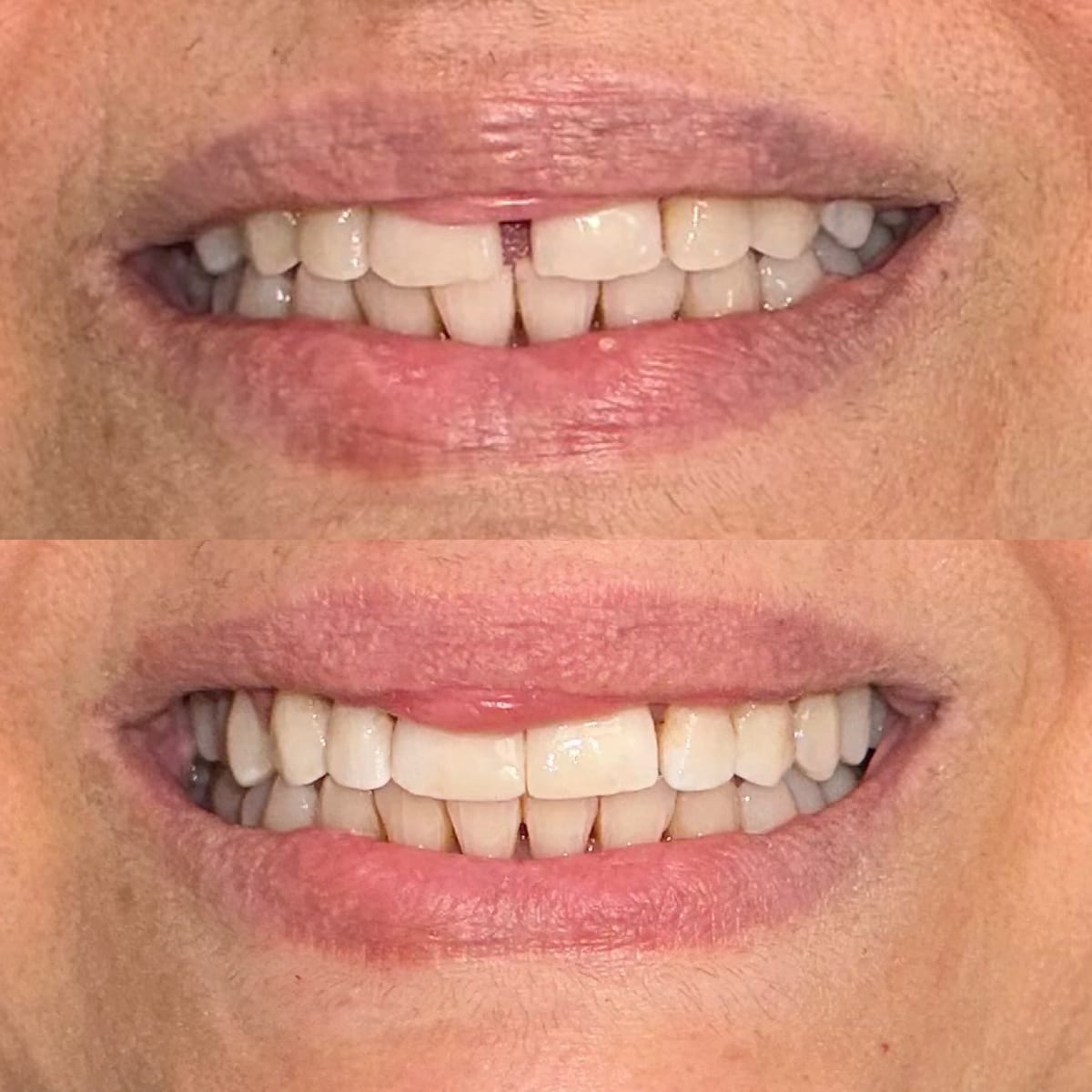
A cavity, a chipped edge or a small gap between front teeth can usually be repaired with the same tooth-colored material. As a filling, it rebuilds a tooth after decay is removed. As bonding, it reshapes the surface you see.
Tooth-Colored Fillings
A filling repairs a tooth that decay has damaged. Once the decay is removed, the space is rebuilt with composite, a tooth-colored blend of ceramic and plastic. It is matched to the shade of your tooth, so the repair blends in instead of showing as metal.
Composite bonds directly to the tooth, so less healthy tooth has to be drilled away to hold the filling than with a silver filling. The bonded edge also helps seal the tooth against bacteria. Composite contains no metal, and it works on front and back teeth alike.
Dr. Ivan places both tooth-colored and silver (amalgam) fillings, and tooth-colored fillings are the ones she places most often.
Dental Bonding
Bonding uses the same composite to change the shape or surface of a tooth. The resin is shaded to match the enamel around it, sculpted onto the tooth and hardened with a curing light. It can rebuild a chipped or broken edge, close a small gap, even out a short or uneven tooth and cover a stain that whitening has not lifted.
Bonding can also cover a root surface left exposed by gum recession, which eases the sensitivity there. For a larger change in shape or color across several front teeth, veneers are another option.

Finding Decay Early
Small cavities are the simplest to fill, and many start between the teeth, where they are hard to see in a mirror. Your digital X-rays appear on the monitor moments after they are taken, and Pearl AI, artificial intelligence software, helps Dr. Ivan review each image. A small intraoral camera shows a close-up of a tooth on the screen, so you see what Dr. Ivan sees before you decide on treatment.
Your Visit
-
Exam & Options
The tooth is examined, often with X-rays, and the choice of a filling or bonding is explained.
-
Numbing
A filling usually starts with numbing; bonding often needs none.
-
Preparing the Tooth
Decay is removed, or the surface is lightly roughened so the resin holds.
-
Placing the Composite
Thin layers go on, each hardened with a curing light.
-
Bite & Polish
Your bite is checked and the tooth polished smooth.
After Your Visit
If your tooth was numbed, wait until the feeling returns before you chew. Composite is strong, but biting ice, hard candy or pens directly on a bonded edge can chip it. Coffee, tea and red wine can stain bonding over time, and brushing, flossing and regular cleanings help it keep its color. A filled tooth can feel a little sensitive to cold for a few days.
Costs & Insurance
What a filling costs depends on its size and on which tooth needs it. Many dental insurance plans cover fillings that treat decay, while bonding done only to change how a tooth looks may not be covered. Before treatment starts, you receive a written plan with an estimate of your share, and the office files the insurance claim for you.
Fillings & Bonding FAQs
Are tooth-colored fillings as strong as silver fillings?
Modern composite is durable and holds up well on both front and back teeth. Silver amalgam has a longer track record for very large fillings on molars. When a tooth has lost so much structure that a filling would have to be very large, a crown usually protects it better.
Does getting a filling hurt?
The tooth is numbed with a local anesthetic before any decay is removed, so you should feel pressure rather than pain. A very small filling may not need numbing at all. Afterward, the tooth can feel mildly sensitive for a few days, and this usually settles on its own.
How long do composite fillings last?
Composite fillings can last for many years. How long yours lasts depends on its size, how well you brush and floss, whether you grind your teeth and habits such as chewing ice. Regular checkups catch wear early, while it is still easy to repair.
Can I replace my old silver fillings with white ones?
Yes. Many patients replace silver fillings with tooth-colored composite, either because they would rather not see the metal or because an old filling is wearing out. At an exam, your existing fillings are checked to see whether replacing them would help.
What's the difference between a filling and bonding?
A filling treats a cavity: the decay is removed and the tooth's structure is rebuilt. Bonding changes the visible surface of a tooth, such as a chip, a gap or a stain. Both use the same tooth-colored composite, so a single procedure can often do both.
How much do fillings and bonding cost?
The cost depends on the size of the repair and the tooth being treated. Many dental insurance plans cover fillings that treat decay, but bonding done only for appearance may not be covered. You receive a detailed estimate before treatment begins, and our financing options offer ways to pay over time.
Schedule Your Visit
Schedule a time online to have a cavity, a chip or a gap looked at, or call the office with questions first.
- Visit
1430 N Arlington Heights Rd #205
Arlington Heights, IL 60004- Hours
Monday 8am – 7pm
Tuesday 8am – 5pm
Wednesday 8am – 5pm
Thursday 8am – 5pm
Fri – Sun Closed