Cracked Teeth in Arlington Heights, IL
A cracked tooth can be hard to pin down. The pain may come and go, often only when you bite, and the crack itself is usually too fine to see in a mirror. Finding it early gives the tooth the best chance.

What a Cracked Tooth Is
A crack can be as shallow as a line in the enamel or deep enough to reach the nerve or the root. When you bite down, the two sides of the crack flex apart and irritate the nerve inside. That is why the pain is often sharp on biting and stops when you let go. Hot, cold or sweet foods can set it off too, and the gum beside the tooth may swell.
Many people can tell which side hurts but not which tooth. Cracks show up most in the back teeth, which take the heaviest chewing forces and often hold large fillings. Unlike a broken bone, a cracked tooth does not heal, and a crack left alone tends to spread.
Types of Cracks
Cracks are named by where they start and how far they run, and the type usually decides the treatment.
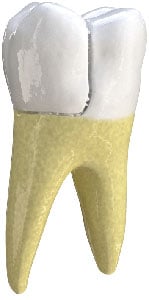
Fractured Cusp
One of the tooth's chewing points breaks off, usually without reaching the root. A crown typically repairs it.
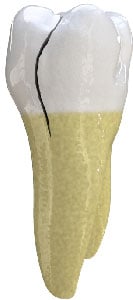
Cracked Tooth
A crack runs from the chewing surface down toward the gum line. The treatment depends on how deep it goes: if it has reached the nerve, root canal treatment comes before the crown, and Dental Clinique refers that to a specialist.
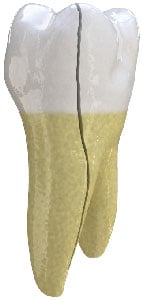
Split Tooth
The crack has divided the tooth into two parts. A severe split means the tooth has to be removed.
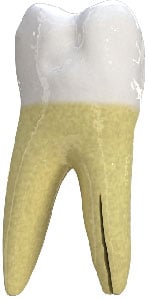
Vertical Root Fracture
The crack starts in the root and is often silent until it is advanced. Removing the tooth is often needed.
Grinding & Cracked Teeth
Grinding and clenching put heavy force on the back teeth, often during sleep, and over time that force can split a tooth. Worn or chipped teeth, a sore jaw or face and headaches can all point to grinding, though many people notice nothing. An occlusal guard made for your teeth and worn at night helps protect your teeth from that force.
Your Visit
-
Your Symptoms
You're asked where it hurts, what sets it off and how often.
-
Exam
Bite tests and a bright light shone through the tooth help locate the crack.
-
Imaging
Digital X-rays and, when needed, a 3D CBCT scan show how deep it runs.
-
Diagnosis
The type of crack and the treatment it needs are explained.
-
Treatment
The sooner the tooth is treated, the more options remain.
Before Your Visit & Preventing Cracks
Until the tooth is seen, chew on the other side, and an over-the-counter pain reliever can ease the soreness. Note which side hurts, even if you can't name the tooth.
To protect your other teeth, avoid biting ice, popcorn kernels and pens, and don't open packages with your teeth. Wear a mouthguard for contact sports, and have large, old fillings checked, since a crown may protect that tooth better.
Cracked Teeth FAQs
Can a cracked tooth heal on its own?
No. Teeth cannot repair themselves the way bone does, so a crack stays and usually grows. A small crack can eventually split the tooth, and a split tooth often has to be removed. That is why finding and treating a crack early matters.
Why does my cracked tooth only hurt sometimes?
Biting pushes the two sides of the crack apart, which irritates the nerve inside the tooth. Let go, and the crack closes again, so the sharp pain fades as quickly as it came. Pain that switches on and off with biting is one of the most typical signs. Hot and cold can hurt too, because the crack lets temperature reach the nerve more easily.
Can a cracked tooth be saved?
It depends on the type of crack and how far it runs. A fractured cusp or a crack above the gum line can usually be held together with a crown. A split tooth or a vertical root fracture may need to be removed. Your options are explained after the exam.
Do craze lines need treatment?
Why are back teeth more likely to crack?
Molars and premolars take the heaviest forces when you chew, and they often carry large fillings that leave less natural tooth to absorb those forces. Together, that makes them more likely to crack than front teeth.
What happens if I don't treat a cracked tooth?
The crack keeps spreading. Bacteria can get into it and infect the nerve, which can lead to an abscess, and in time the tooth can split in two. Removing it may then be the only option, so treating the crack while the tooth can still be saved is the better path.
Can a crown fix a cracked tooth?
A crown is one of the most common treatments. It covers the tooth and holds it together so the crack does not spread. If the crack has reached the nerve, the tooth needs root canal treatment before the crown, and Dental Clinique refers that treatment to a specialist. Whether a crown alone is enough is decided at your exam.
Schedule Your Visit
If a tooth hurts when you bite, schedule an exam online, or call the office to describe what you feel.
- Visit
1430 N Arlington Heights Rd #205
Arlington Heights, IL 60004- Hours
Monday 8am – 7pm
Tuesday 8am – 5pm
Wednesday 8am – 5pm
Thursday 8am – 5pm
Fri – Sun Closed