Exams & Cleanings in Arlington Heights, IL
Plaque that brushing misses hardens into tartar, and only a professional cleaning removes it. A regular checkup pairs that cleaning with an exam, so a small cavity or an early gum problem can be found while it is still simple to treat.
Your Exam & Cleaning
At the exam, Dr. Ivan checks each tooth for decay, cracks and wear, and looks at the fillings, crowns or other restorations you already have. Your gums are checked for redness, bleeding and recession, and the small pocket around each tooth is measured, since a deepening pocket is an early sign of gum disease. Your bite and jaw are checked for signs of grinding or clenching. Every exam includes an oral cancer screening. Your tongue, cheeks and the other soft tissues of your mouth are checked for any change that needs a closer look.
Once plaque hardens into tartar, also called calculus, a toothbrush can no longer remove it. The cleaning takes plaque and tartar off every surface of your teeth, including along and just below the gum line, and then polishes away surface stains. It usually takes 30 minutes to an hour, at the same visit as your exam.
Regular visits matter because problems found early are smaller. A cavity caught early usually needs only a small filling, and gum inflammation treated before the bone is affected can often be reversed.
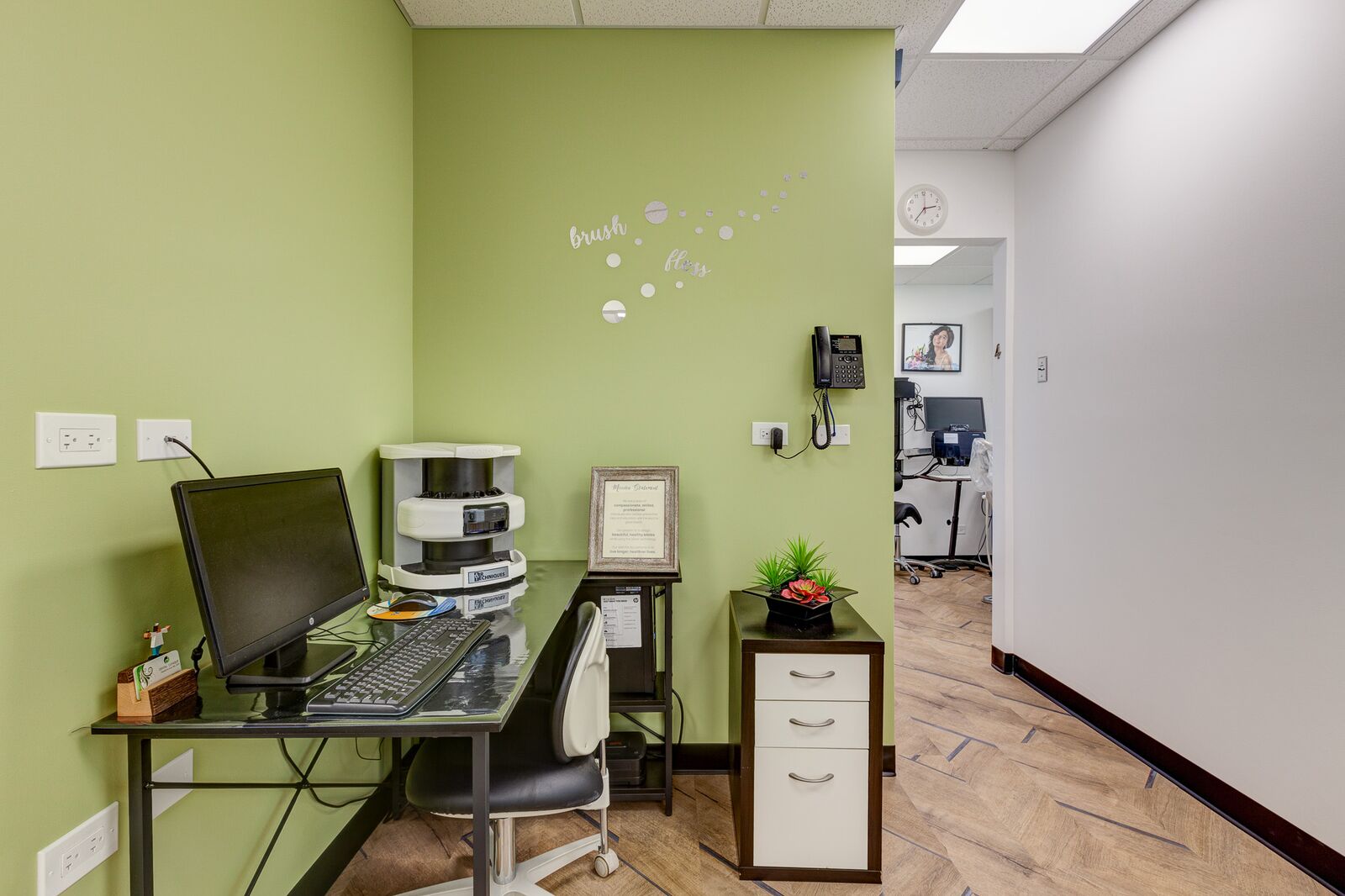
Digital X-Rays & Intraoral Cameras
The X-rays at your checkup are digital, so each image appears on the monitor moments after it is taken, with no film to develop. Dr. Ivan reviews them with Pearl AI, artificial intelligence software that helps her read every image.
A small intraoral camera puts a close-up of a worn tooth or an old filling on the same screen. You see what she sees, and the two of you can talk about it before any treatment is decided.
Your Visit
-
Check-In
Update your medical history and any changes since your last visit.
-
X-Rays
Digital X-rays are taken if they are due.
-
Cleaning
Plaque and tartar are removed, then your teeth are polished and flossed.
-
Exam
Dr. Ivan reviews your X-rays, examines your teeth and gums and explains what she finds.
-
Next Steps
Any treatment you need is explained, with its cost, before you leave.
Preparing for Your Visit
A new patient's first visit can take 60 to 90 minutes, and most first visits include a cleaning. If you have severe gum disease, deep cleaning visits are scheduled instead, and that cleaning is done with local anesthesia. You can fill in the New Patient Forms before you come. Bring your dental insurance card and a list of the medications you take. If you have noticed sensitive teeth, bleeding gums or jaw pain, mention it when you arrive so the exam can focus there. If your child is due for a checkup too, you can ask about fluoride and sealants at the same visit.

Costs & Insurance
The office files your insurance claim for you. You can pay your share with cash, check, Visa, MasterCard or American Express, and it is due at the time of service. For larger treatment plans, monthly payments are available through Cherry and Sunbit.
Exams & Cleanings FAQs
How often should I get a dental exam and cleaning?
Every six months suits most patients. If you have gum disease, a history of frequent cavities or other risk factors, your visits are usually scheduled more often, at an interval set for your needs.
Does a dental cleaning hurt?
Most people find a cleaning comfortable. You may feel some pressure, or brief sensitivity where tartar has built up or the gums are inflamed. If your teeth are sensitive or dental visits make you nervous, say so before the cleaning starts.
What's the difference between a regular cleaning and a deep cleaning?
A regular cleaning, called a prophylaxis, removes plaque and tartar above and just below the gum line. A deep cleaning, called scaling and root planing, treats gum disease: it reaches further below the gum line, clears bacteria from deeper pockets and smooths the root surfaces. It is recommended only when gum measurements show it is needed.
Are dental X-rays safe?
Yes. Dental X-rays use a low dose of radiation, and digital X-rays generally need less than film. Dentists follow a principle called ALARA, short for "as low as reasonably achievable." X-rays are taken only when they show something the exam needs, such as decay between the teeth or the bone levels below the gums.
What happens if the dentist finds a cavity during my exam?
You learn where the cavity is and how deep it goes, what the treatment involves, usually a tooth-colored filling, and what it is estimated to cost. A small cavity found early is quick and simple to treat, which is one more reason to keep up with regular checkups.
Do you accept my dental insurance?
Dental Clinique is in network with Aetna, AlwaysCare, Cigna (Total DPPO plans only), Delta Dental PPO, GEHA, Guardian (Dental Guard Preferred plans), Humana (PPO and Medicare), Lincoln Financial Group, MetLife (PDP Plus and FEDVIP) and Principal. Many plans cover two preventive exams and cleanings a year. The office checks your coverage and explains any costs before treatment. See our financing page for ways to pay.
Schedule Your Checkup
Choose Hygiene Recall for your six-month visit, or New Patient Visit if you are new, and pick a time online.
- Visit
1430 N Arlington Heights Rd #205
Arlington Heights, IL 60004- Hours
Monday 8am – 7pm
Tuesday 8am – 5pm
Wednesday 8am – 5pm
Thursday 8am – 5pm
Fri – Sun Closed