Dental Implants in Arlington Heights, IL
A missing tooth leaves more than a gap. The teeth beside it can drift, and the bone that held its root slowly shrinks. A dental implant replaces the whole tooth, root and crown, and stands on its own in the jawbone.
How a Dental Implant Works
An implant has three parts. A small titanium post is placed in the jawbone, where it takes the place of the tooth's root and gradually bonds with the bone. A connector called an abutment is attached to the post, and a crown made for the space fits on the abutment as the part of the tooth you see.
Because the post sits in the bone, the new tooth stays in place without adhesives and you can eat normally. It also helps keep the bone around it from shrinking. Every case is different: the bone, the position of the gap and your health all shape the plan.

Implants & Bridges
| Question | Dental Implant | Bridge |
|---|---|---|
| Held in place by | A post in the jawbone | Crowns on the teeth either side of the gap |
| Neighboring teeth | Left as they are | Shaped to hold the crowns |
| Bone under the gap | Helps keep its volume | Not supported by a root |
| Cleaning | Brush and floss as usual | A floss threader under the bridge |
A bridge can make sense when the neighboring teeth already need crowns; when they are healthy, an implant spares them.
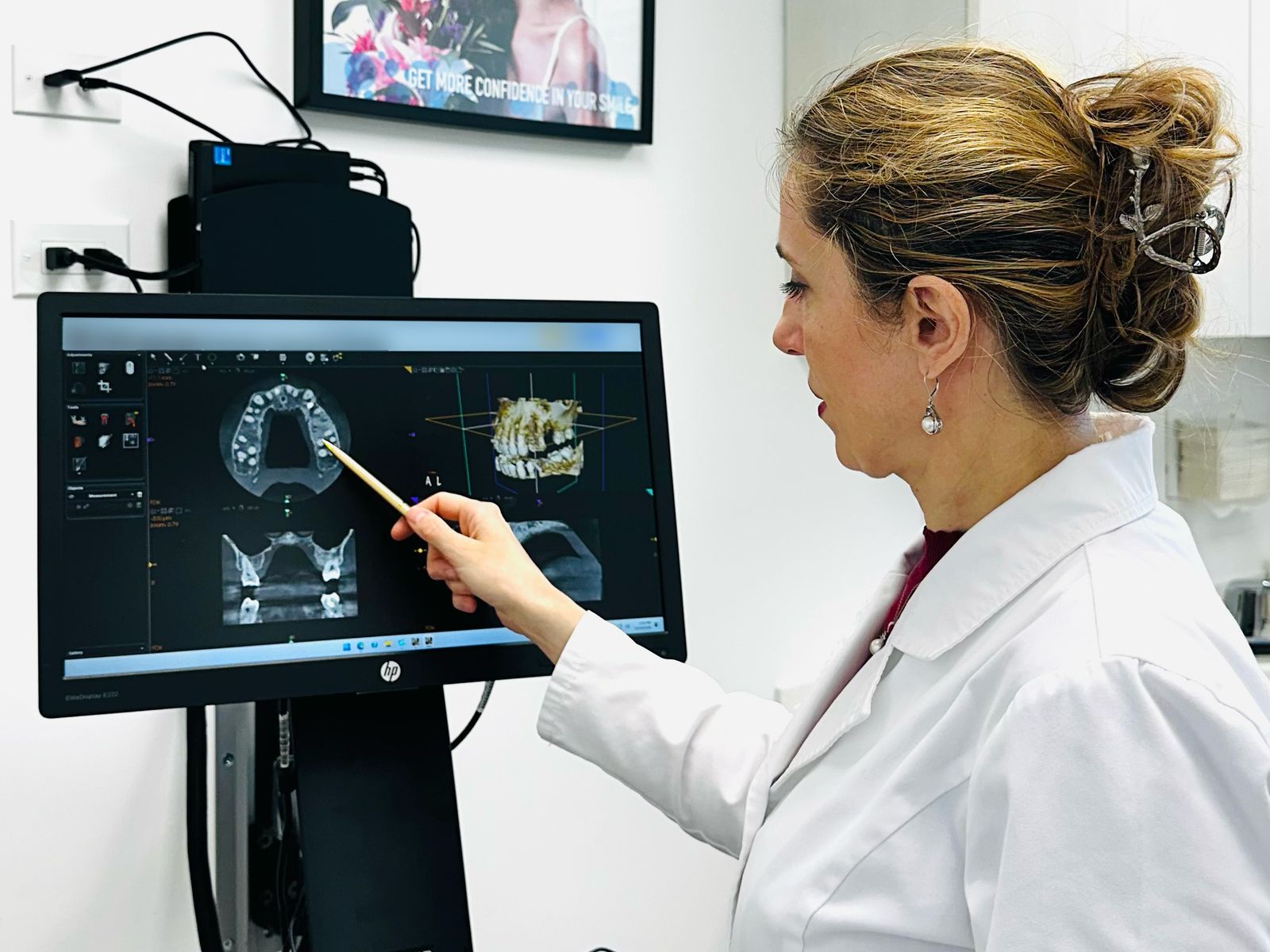
Planned in 3D
Before an implant is placed, Dr. Ivan plans it on a CBCT scan, a 3D view of your teeth, jawbone and nerves. The scan shows how much bone there is and where the nerves run, so the post's position is chosen before treatment begins. She then places every implant through a custom surgical guide made for your mouth, which holds the post to its planned position and angle.
Your Treatment
-
Consultation & Scan
X-rays and a CBCT scan show the bone and where the implant can go.
-
Placement
After numbing, the post is placed through your custom surgical guide; PRF may support healing.
-
Healing
Over several months, the post bonds with the bone.
-
Abutment
The connector is attached to the implant.
-
Crown
Your crown is attached and your bite checked.
Caring for Your Implant
Some soreness after placement is normal, and an over-the-counter pain reliever usually manages it. While the implant heals, avoid chewing hard or crunchy food on that side, and follow the care instructions you're given. Once your crown is in place, brush twice a day and floss around the implant as you would around a natural tooth. Regular checkups keep an eye on the implant and the gum around it over the years.
Costs & Insurance
The cost of an implant depends on your case, including whether a bone graft is needed first. Before treatment starts, you receive a written plan with an estimate of your share, and the office files the insurance claim for you.
Dental Implant FAQs
How long does the dental implant process take?
Usually several months from placement to the final crown, because the implant needs time to bond with the jawbone. If a bone graft is needed first, the process takes longer. Your own timeline is set when your treatment is planned.
Does getting a dental implant hurt?
The implant is placed under local anesthesia, so you should not feel pain during the procedure. Afterward, soreness for a few days is common, and over-the-counter pain medication is usually enough to manage it.
How long do dental implants last?
With good care and regular checkups, an implant can last for many years. The crown on top wears with daily use and may eventually need to be replaced, while the post in the bone is meant to stay.
Am I a good candidate for a dental implant?
Many adults with a missing tooth are. The main requirement is enough healthy jawbone to hold the implant, and if bone has been lost, a bone graft can rebuild it first. Your bone and health are checked with X-rays and a 3D scan before anything is decided.
How much does a dental implant cost?
The cost depends on your case, including whether a bone graft is needed. An implant usually costs more at the start than a bridge, but it leaves the neighboring teeth untouched. You receive a detailed estimate before treatment, and our financing options offer ways to pay over time.
What happens if I don't replace a missing tooth?
The neighboring teeth can shift into the gap, the jawbone there shrinks and your bite can change, which can make chewing harder. Teeth next to a gap are also harder to keep clean, which raises the risk of decay and gum disease. Replacing the tooth sooner usually keeps treatment simpler.
Can I get an implant if I've been missing a tooth for a long time?
Often, yes, though the bone may have shrunk enough that a bone graft is needed first. A 3D scan shows how much bone is left, and the plan rebuilds the bone before the implant if it needs to.
Schedule Your Visit
Schedule an implant consultation online to see whether an implant suits the space, or call the office with any questions first.
- Visit
1430 N Arlington Heights Rd #205
Arlington Heights, IL 60004- Hours
Monday 8am – 7pm
Tuesday 8am – 5pm
Wednesday 8am – 5pm
Thursday 8am – 5pm
Fri – Sun Closed